Concrete Driveway vs Asphalt Driveway at a Glance
Choosing the right driveway material is an important decision for Ontario homeowners. Both concrete and asphalt can provide a reliable driving surface, but they differ in appearance, maintenance requirements, installation, durability, and long-term performance.
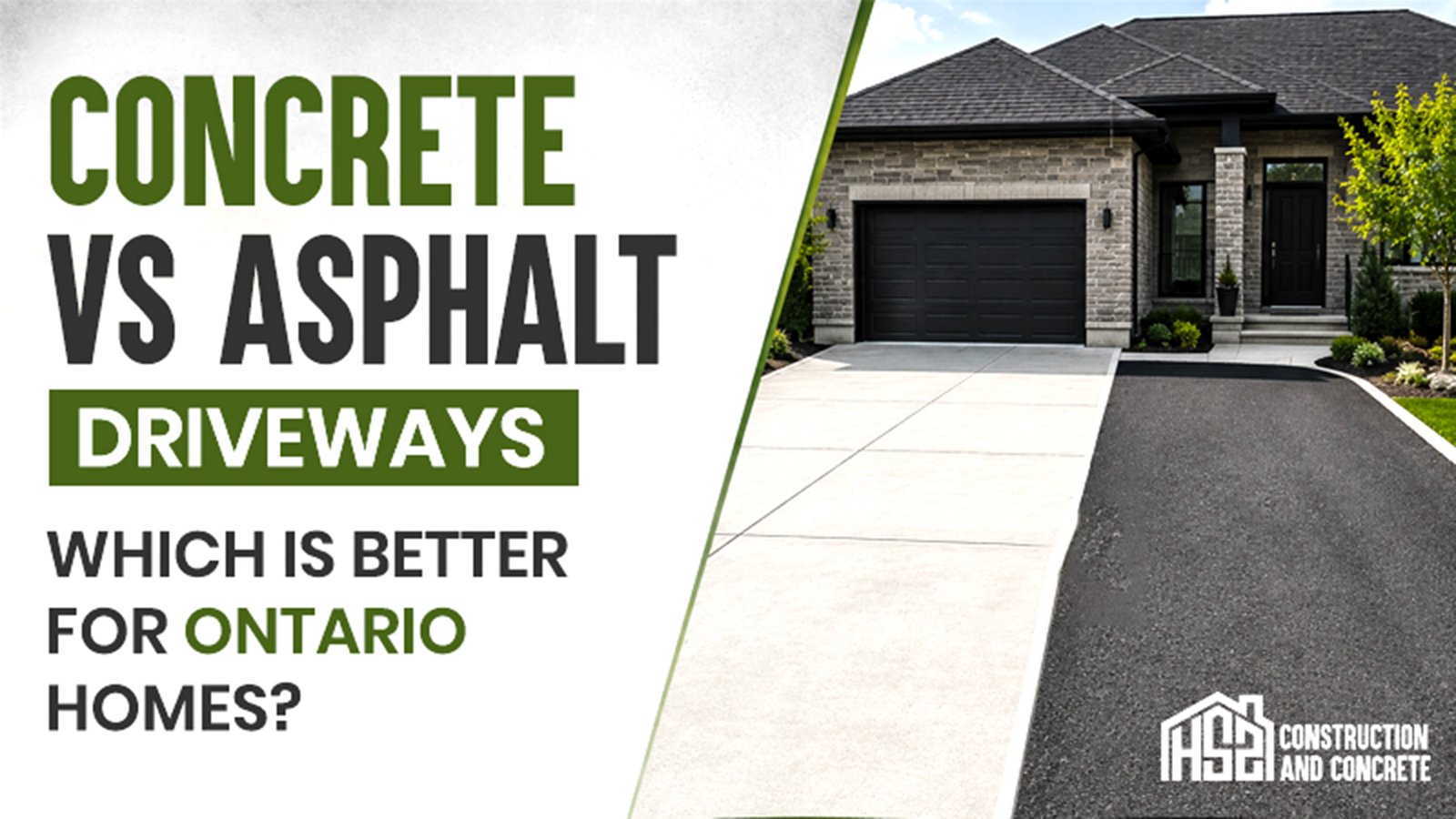
Concrete driveways are known for their strength, clean appearance, longevity, and design flexibility. They can be customized with finishes such as plain, coloured, stamped, and exposed aggregate concrete.
HSS Concrete provides professional concrete driveway installation in London and surrounding areas, with solutions designed for both residential and commercial properties.
Asphalt driveways are popular for their dark appearance, relatively quick installation, and practical driving surface. They can be a suitable choice for homeowners who prefer a traditional driveway appearance and potentially lower initial installation costs.
Let’s compare the two options in more detail.
1. Durability
Durability is one of the most important considerations when comparing a concrete driveway with an asphalt driveway.
Concrete provides a strong, rigid surface that can handle regular vehicle traffic when properly designed and installed. Proper excavation, base preparation, reinforcement, drainage, driveway thickness, and concrete specifications are particularly important for Ontario conditions.
Asphalt is a flexible material, which can be beneficial when the ground experiences movement. However, asphalt can soften during very hot weather and may require periodic maintenance to address surface deterioration, cracks, and potholes.
For homeowners looking for a long-lasting and structurally strong driveway, concrete can be an excellent option when it is professionally installed and properly maintained.
2. Performance in Ontario Winters
Ontario weather presents unique challenges for driveway materials. Freezing temperatures, snow, ice, moisture, and repeated freeze-thaw cycles can all affect outdoor surfaces.
A properly installed concrete driveway can perform well in Ontario’s climate. However, drainage and base preparation are critical. Water that enters cracks or remains beneath the driveway can contribute to freeze-thaw damage.
Asphalt also requires proper preparation and drainage to perform well during winter. Because asphalt is more flexible, it can accommodate some ground movement, but cracks should be addressed before moisture penetrates the surface.
The key consideration is that installation quality matters just as much as material selection. Ontario concrete driveways should account for factors such as:
- Freeze-thaw cycles
- Drainage
- Soil conditions
- De-icing exposure
- Driveway thickness
- Reinforcement
3. Maintenance Requirements
Both concrete and asphalt require maintenance, although the type and frequency of maintenance can differ.
Concrete Driveway Maintenance
A concrete driveway generally benefits from:
- Regular cleaning
- Appropriate sealing where recommended
- Prompt attention to cracks or surface damage
- Proper drainage to help prevent water-related problems
Taking care of these areas can help protect the appearance and performance of the driveway over time.
Asphalt Driveway Maintenance
Asphalt may require more frequent maintenance over its service life, including:
- Crack filling
- Periodic sealing
- Repairs to areas affected by surface deterioration
- Prompt attention to potholes and other damage
These maintenance measures can help protect the asphalt surface from water penetration and weather-related deterioration.
For homeowners who prefer a driveway that requires less routine surface maintenance, concrete may be worth considering.
4. Appearance and Design Options
If curb appeal is an important consideration, concrete offers a significant advantage.
A standard concrete driveway provides a clean and modern appearance, while decorative options allow homeowners to create a more customized look. Depending on the desired style, concrete can be finished as:
- Plain concrete
- Coloured concrete
- Stamped concrete
- Exposed aggregate concrete
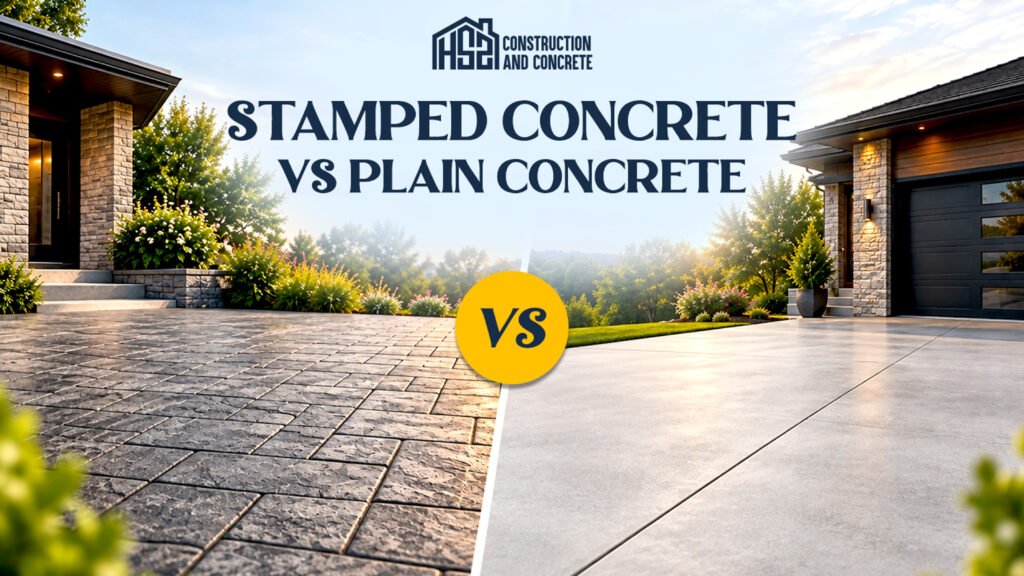
Stamped concrete can replicate the appearance of materials such as stone, brick, or tile while retaining the characteristics of a concrete surface.
Asphalt generally provides a simple, dark, and traditional appearance. While this style works well with many homes, it offers fewer decorative possibilities than concrete.
For homeowners who want their driveway to complement their home’s architecture, landscaping, and overall exterior design, a concrete driveway provides greater flexibility.
5. Cost Considerations
Initial installation cost is another important factor when comparing concrete and asphalt driveways.
The price of either option depends on several Work-specific factors, including:
- Driveway size
- Excavation requirements
- Existing surface removal
- Base preparation
- Drainage
- Reinforcement
- Material requirements
- Site accessibility
- Selected finish
- Labour
Asphalt can sometimes have a lower upfront installation cost, which may make it attractive to homeowners working with a tighter initial budget.
Concrete may require a higher initial investment, especially when decorative finishes are selected. However, homeowners should look beyond the installation price and also consider maintenance, service life, appearance, and long-term value.
The best way to compare costs is to request a Work-specific quote based on the actual condition and requirements of the property.
6. Concrete vs Asphalt: Which One Should Ontario Homeowners Choose?
There is no single answer that applies to every property. The right choice depends on your priorities, property conditions, budget, appearance preferences, and expected maintenance requirements.
Choose a Concrete Driveway If You Prioritize:
- Long-term durability
- A clean and premium appearance
- Design and finish options
- Strong structural performance
- Curb appeal
- A customized driveway design
Choose an Asphalt Driveway If You Prioritize:
- A traditional dark driveway appearance
- Flexibility
- Potentially lower initial installation costs
- A straightforward driveway surface
Regardless of which material you choose, professional installation and proper site preparation are essential.
A poorly prepared base, inadequate drainage, or improper installation can reduce the performance and longevity of any driveway.
Why Choose HSS Concrete for Your Driveway?
HSS Concrete provides professional concrete driveway installation in London, Ontario, and surrounding areas. The company focuses on durable and attractive concrete solutions, with driveway designs tailored to residential and commercial properties.
HSS Concrete also provides a range of other concrete services, including:
- Patios
- Walkways
- Entrance steps
- Plain concrete
- Stamped concrete
- Exposed aggregate concrete
Whether you are replacing an old driveway or installing a new one, the team can assess your Work requirements and recommend a suitable concrete solution based on your property, intended use, preferred finish, and site conditions.
Conclusion
When comparing concrete and asphalt driveways, Ontario homeowners should look beyond the initial installation price.
Important factors to consider include:
- Durability
- Winter performance
- Maintenance requirements
- Appearance
- Drainage
- Site preparation
- Long-term value
Concrete is particularly appealing for homeowners who want a durable, attractive, and customizable driveway that complements their property.
Asphalt remains a practical option for homeowners who prefer its traditional appearance, flexibility, and potentially lower initial installation cost.
If you are considering a new concrete driveway in London, Ontario, professional planning and installation can help ensure that your driveway is built to handle everyday use and Ontario’s changing weather conditions.
Contact HSS Concrete to discuss your driveway Work and get a Work-specific quote.
Frequently Asked Questions
1. Is concrete or asphalt better for driveways in Ontario?
Both concrete and asphalt can be suitable for Ontario homes. Concrete is often preferred for its durability, appearance, and customization options, while asphalt offers flexibility and a traditional dark surface.
Regardless of the material selected, proper base preparation, drainage, and professional installation are important for achieving good long-term performance.
2. Does a concrete driveway crack in Ontario winters?
Concrete can develop cracks over time, particularly when exposed to freeze-thaw cycles, poor drainage, ground movement, or improper installation.
Proper preparation, suitable concrete specifications, reinforcement, control joints, effective drainage, and regular maintenance can help reduce the risk of significant cracking.
3. Is an asphalt driveway cheaper than concrete?
Asphalt can have a lower initial installation cost for some Work, but pricing varies depending on several factors.
These can include:
- Driveway size
- Excavation requirements
- Site preparation
- Materials
- Accessibility
- Existing surface conditions
- Other Work-specific requirements
A Work-specific quote is the best way to compare the actual cost of asphalt and concrete for your property.
4. How long does a concrete driveway last?
A properly designed, professionally installed, and well-maintained concrete driveway can provide many years of service.
Its lifespan depends on factors such as:
- Soil conditions
- Drainage
- Installation quality
- Vehicle loads
- Weather exposure
- Maintenance
- Concrete specifications
Proper construction and maintenance can play an important role in maximizing the driveway’s service life.
5. Can concrete driveways be customized?
Yes. Concrete driveways can be finished in several ways, including:
- Plain concrete
- Coloured concrete
- Stamped concrete
- Exposed aggregate concrete
These options allow homeowners to create a driveway that complements their home’s exterior, landscaping, and overall design.
HSS Concrete offers several concrete finish options for residential Work.